Keynote Speakers
Intelligent and Secure XR: Building Adaptive Spatial Systems That Know When They Are Wrong
Maria Gorlatova
Sternberg Family Associate Professor of Electrical and Computer Engineering at Duke University

Bio.
Dr. Maria Gorlatova is the Sternberg Family Associate Professor of Electrical and Computer Engineering at Duke University. Her research centers on pervasive and immersive computing systems, with a focus on spatial computing, next-generation augmented reality, edge-assisted XR, and human-centered AI for real-time interactive environments. Prior to joining Duke, she received her Ph.D. in Electrical Engineering from Columbia University and spent two years at Princeton University as an Associate Research Scholar and Associate Director of the Princeton EDGE Lab. Dr. Gorlatova is the recipient of multiple awards, including the NSF CAREER Award, the DARPA Young Faculty Award, the DARPA Director’s Fellowship, the IEEE ISMAR 2025 Best Paper Award, and the IEEE Communications Society Award for Advances in Communications. She served as TPC Co-chair of ACM/IEEE SenSys 2025 and is currently serving as General Chair of ACM HotMobile 2027.
Abstract.
Immersive computing is moving beyond basic overlays into complex, real-world deployments. In this talk, I will highlight several cutting-edge XR applications developed in our lab, including solutions for healthcare and human-robot interaction, that rely on tight integration with edge computing and advanced sensing pipelines. As these systems become more capable, ensuring their safety and reliability becomes a critical bottleneck.
When deployed in unconstrained environments, mixed reality experiences can fail in subtle but consequential ways. Virtual objects may drift or occlude critical real-world elements; spatial audio cues may contradict visual content; and MR-based guidance may suggest actions that are impossible or unsafe. These failures are highly context-dependent: content that is useful in one environment can be unsafe in another. They therefore cannot be detected by classical signal processing or conventional ML approaches alone.
Recent large multimodal models (LMMs) provide a new mechanism for monitoring immersive systems. By jointly reasoning over video streams captured by MR devices, rendered virtual content, spatial audio, and scene context, these models have the potential to identify misaligned overlays, unsafe occlusions, inconsistent audio-visual cues, and policy violations in MR applications. In this talk, I will present an LMM-based MR evaluation pipeline that uses LMMs together with auxiliary ML models to analyze continuous multimodal streams and trigger corrective actions when problematic virtual content is detected. A key challenge in LMM-based XR evaluation is reducing inference latency to support near real-time operation. I present a collection of system design choices and lay out a research agenda with the potential to bring down the cost and latency of these systems.
Architecting Live and Adaptable 3D Systems for Spatial Intelligence
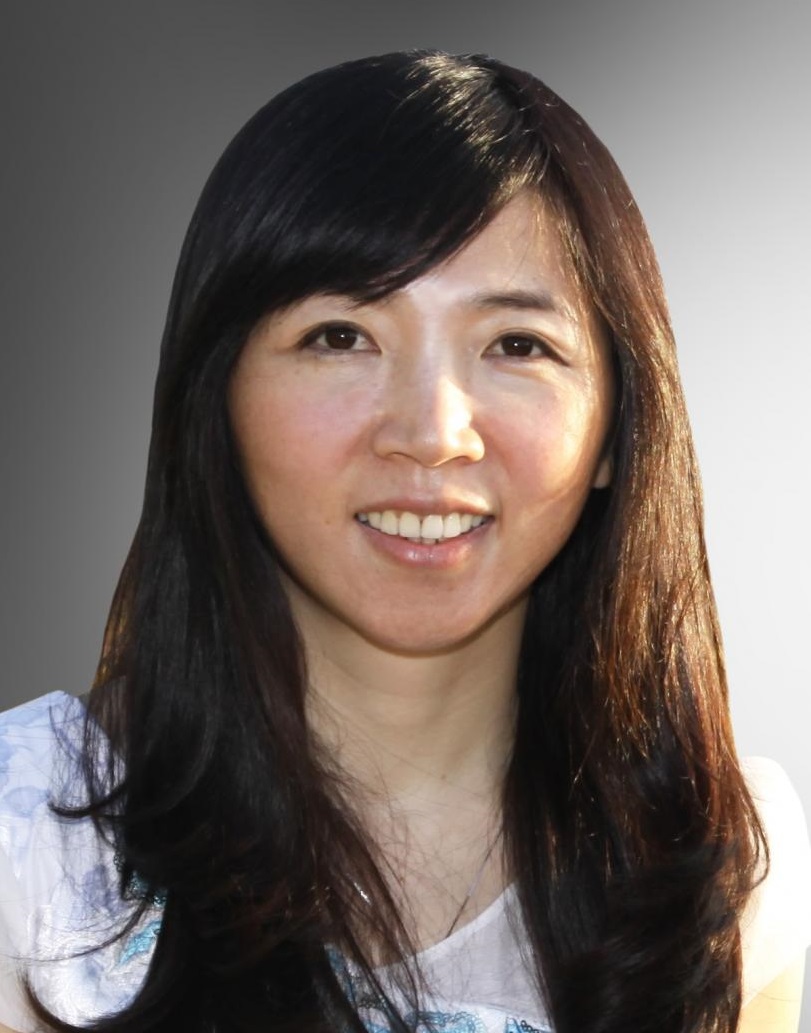
Yingyan "Celine" Lin
Associate Professor in the School of Computer Science at the Georgia Institute of Technology
Bio.
Dr. Yingyan (Celine) Lin is an associate professor in the School of Computer Science at the Georgia Institute of Technology, where she directs the Efficient and Intelligent Computing Lab and co-directs the Center for Advancing Responsible Computing. Her research centers on efficient intelligent computing through cross-layer innovations spanning algorithms, computer architecture, and chip design. She received her Ph.D. from the University of Illinois Urbana-Champaign and was an assistant professor at Rice University before joining Georgia Tech. Dr. Lin is the recipient of multiple honors, including the NSF CAREER Award, the ACM SIGDA Outstanding Young Faculty Award, the SRC Young Faculty Award, and the Georgia Tech College of Computing Outstanding Mid-Career Faculty Research Award. Her work has been selected as an IEEE Micro Top Pick 2023, received the MICRO 2024 Best Paper Award and an oral presentation at ECCV 2024, and earned spotlight selections at ICLR 2020, 2021, and 2025 and NeurIPS 2025. She served as TPC Co-Chair of MLSys 2025 and as Vice Chair of the 2026 IEEE Micro Top Picks selection committee.
Abstract.
Spatial intelligence requires machines to continuously construct, maintain, and query representations of the 3D world under stringent latency, energy, memory, and form-factor constraints. Yet neural 3D techniques have largely emerged as offline, GPU-intensive, and representation-specific pipelines. In this talk, I will present our efforts to transform neural 3D into a deployable computing substrate. Our early work made neural scene reconstruction and rendering practical on resource-constrained devices. We then moved the architectural boundary from isolated kernels to the complete reconstruction-rendering lifecycle, including integrated chip and multi-chip systems. More recently, to keep pace with rapidly evolving representations, we developed workload-aware optimizations, GPU and graphics-pipeline extensions, and reconfigurable architectures that remain efficient across neural radiance fields, Gaussian splatting, and hybrid neural renderers. Together, these works reveal three principles for architecting emerging visual systems: optimize the work that hardware actually executes; co-design the full lifecycle of persistent 3D state; and specialize what is stable while reconfiguring what continues to change. I will conclude with opportunities in persistent spatial memory, continuous world updates, geometry foundation models, and shared 3D state for rendering, reasoning, and embodied action.
A Cross-Stack Optimization Pathway Toward Efficient Multimodal AI
Hongxiang Fan
Assistant Professor in the Department of Computing at Imperial College London

Bio.
Hongxiang Fan is an Assistant Professor in the Department of Computing at Imperial College London and a Visiting Fellow in the Department of Computer Science and Technology at the University of Cambridge. Before joining Imperial, he was a Research Scientist at Samsung AI Cambridge, where he worked on efficient machine learning algorithms, mobile neural processing units, and algorithm-hardware co-design. His research focuses on computer architecture, quantum computing, and machine learning systems. His work has received the 2026 Microsoft Faculty Research Award, as well as Best Paper nominations at ASAP‘19 and FPT‘19. He has also served as an Area Chair for DAC‘24 and a Session Chair for ISCA‘26.
Abstract.
Recent advances in AI algorithms, from LLM/VLM reasoning to neural rendering, have demonstrated impressive capabilities, but they also impose substantial computational and memory overheads on modern systems, limiting their deployment in real-world settings. Advancing the efficiency frontier of these AI workloads requires cross-stack co-design across algorithms, systems, and hardware, so that large-scale deployment becomes practical, not just possible, for a broad range of applications. This talk presents a cross-stack optimization pathway for efficient multimodal AI, showing how algorithm-system-hardware co-design can improve system performance while preserving algorithmic quality.
Enabling Efficient 3D Gaussian Splatting on Edge GPUs and Specialized Accelerators
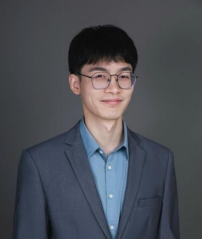
Yu Feng
Assistant Professor at the John Hopcroft Center for Computer Science, Shanghai Jiao Tong University
Bio.
Yu Feng is currently an Assistant Professor at the John Hopcroft Center for Computer Science, Shanghai Jiao Tong University. He received his Ph.D. in Computer Science from the University of Rochester in 2023. His research interests span computer architecture, edge AI inference acceleration, and edge-cloud collaborative computing. He has published more than 40 papers in top-tier computer architecture conferences, including ISCA, MICRO, ASPLOS, and HPCA. He is the recipient of multiple awards, including the IEEE VR 2022 Best Paper Honorable Mention, the ICCD 2024 Best Paper Nomination, the ASPLOS 2025 Best Paper Award, ASPLOS 2026 Best Paper Nomination, and ISCA Hall of Fame.
Abstract.
With the rapid development of 3D Gaussian Splatting (3DGS) in virtual reality, spatial computing, and related fields, the demand for dedicated hardware support has been steadily increasing. As an emerging rendering technique, Gaussian splatting not only significantly improves rendering quality, but also demonstrates broad application potential in complex scenes. However, practical deployment of 3DGS still faces a series of challenges, including strong data dependencies, high computational intensity, and incompatibility with existing GPU architectures. This talk focuses on the rendering pipeline of 3DGS and the current bottlenecks in GPU architectures. It provides an in-depth analysis of the limitations across the algorithm, dataflow, and architecture layers, and proposes corresponding optimization strategies to promote 3DGS toward a more general-purpose and efficient rendering technology.